When Students Ask to Stay: What Meaningful Afterschool Learning Looks Like

A conversation with Selena Felkins, ELP Content Specialist, on what afterschool learning looks like when it complements the school day instead of repeating it.

One afternoon in her second year, a student was in the middle of building a replica of the Leaning Tower of Pisa with her group when her mother arrived to take her home. She wasn't ready to leave. "Just five more minutes," she said. "I have to see if it holds."
That single afternoon wasn't unusual at Sycamore's ELP site, where Selena Felkins was site director. It was part of a pattern she saw again and again.
"Several students would be checked out during the activities and leave in tears, or beg their parents to let them stay, because they wanted to finish their project," Selena said.
The program responded. Virtual lessons moved from 4:00 to 3:30, giving students more time to participate before pickup began.
That small change says a great deal about what the program valued. The clearest measure of whether an afterschool program is working isn't the number of hours it covers or how much homework gets finished. It's what happens when it's time to leave.
More Than Hours, More Than Homework
Afterschool tends to be measured in two ways: by the hours it covers and by how much homework gets done. Both matter to families for real reasons. Neither one tells you much about the quality of the learning happening inside those hours.
High-quality afterschool learning offers something beyond supervision or a study hall. Strong programs give students room to build relationships, explore new interests, move their bodies, solve real problems, and start to see themselves as capable of more than they realized.
Selena has watched that difference build over years in the field.
A Program That Grew Because Families Saw the Difference
Selena spent more than 25 years as an educator and administrator in Sylacauga City Schools. Along the way, she spent several years working in an afterschool program supported through a 21st Century Community Learning Centers grant. She retired in 2019 and quickly realized she missed working with students.
Becoming site director for Sycamore's ELP site (part of SAFE, the Sylacauga Alliance for Family Enhancement) gave her a way back in.
She started in January with about 20 students. By the end of the semester, enrollment had reached the 40s.
Families kept showing up for practical reasons: the program was free, meals and snacks were provided, and students were safe, active, and genuinely enjoying themselves. Many students have been a part of the afterschool program from elementary school through middle school.
Relationships That Grow Year After Year
"Most of the students returned each year, some from first grade through eighth," Selena said.
That kind of continuity builds something a single activity can't. Staff get to know a student's strengths, interests, and rough days. Students get comfortable enough to take a risk in front of a group. Families start to see the program as part of their support system, not an outside service.
This is where "supporting the whole student" stops being a phrase. It becomes visible in a returning face, a familiar routine, an adult who remembers what a student built last spring.
What Learning Looks Like in Practice
Part of what kept students engaged was that the program didn't feel like an extra period tacked onto the school day.
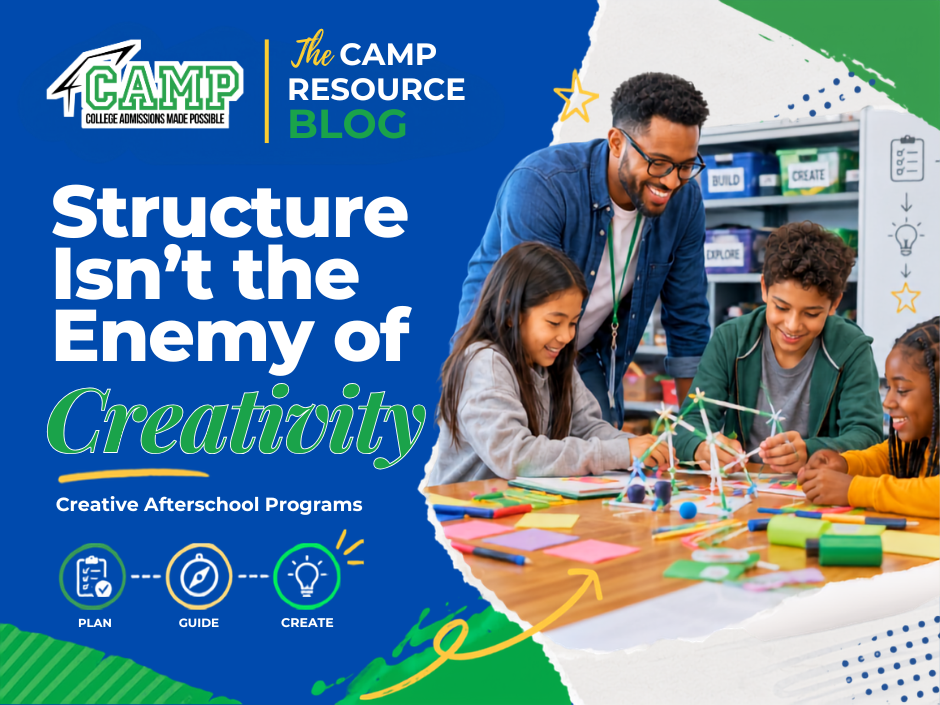
Through Alabama Virtual Institute (AVI) and Team TALL, students took part in a hybrid model of learning: virtual instruction paired with hands-on, real-world learning. Students took part in hands-on STEM lessons, projects, physical activity, summer enrichment, family engagement events, and community involvement. Instead of sitting at desks doing more of what they'd already done that day, students were building, testing, and revising.
In practice, a STEM challenge might ask students to build a structure that can hold weight, protect an object during a drop, or find a way to move something without touching it, then explain, out loud, why the first attempt didn't work. This is the engineering design process, or EDP: try, test, revise, try again. A failed first attempt isn't the end of the work. It's an important part of it.
That kind of practice builds skills students need everywhere: persistence, collaboration, communication, and the confidence to keep going when something doesn't work right away.
When students have a real reason to use a skill, the skill starts to mean something. When they're given room to make choices and contribute to a group, they begin to see learning as something they help shape, not something that just happens to them. It's part of why so many afternoons ended the same way this one did: with a student in the middle of something, not ready to stop.
Moving Beyond the Homework Question
Families sometimes expect afterschool programs to double as homework help, and that expectation makes sense. Parents are managing full schedules, challenging assignments, and students who need support.
Selena understands that need.
"I understand parents want or need help with homework, and I understand the frustration that comes when they ask afterschool sites for help," Selena said.
She also knows how hard it is for a program to meet that need well. In one group, a first grader might need help with reading, a fifth grader might be deep in a hard math assignment, and someone else might have no homework at all. One or two adults can't give each of them what they actually need in an hour.
There's also the student experience to consider. After a full day in a structured academic setting, many students need something different, not more of the same.
This is exactly what AVI and Team TALL are built to do instead: give students STEM challenges, movement, and social and emotional learning that reinforce what happens during the school day without simply repeating it. Some sites still set aside a short window for students who need it while waiting on pickup. But the deeper value doesn't come from redoing the school day. It comes from giving students a different way into learning.
Supporting the Adults Who Make It Possible
None of this holds together without adults who are equipped to run it well.
Selena now works as a content specialist, supporting ELP sites and HUBs with supplies, attendance, data collection, and site visits. Visiting programs across the network has shown her how differently communities bring this work to life and how much site directors learn from each other.
Her idea is simple: continue to bring site directors together, in person or on Zoom, to talk honestly about what's working.
"No dog and pony show," she said. Just practical conversations about parent engagement, community partnerships, and the everyday challenges and achievements of running a site.
"As with any job, we all depend on our peers for guidance and support," Selena said.
That's a real insight about how programs improve. ELP has grown from a single partnership into a network that reaches thousands of students across multiple counties in Alabama, with instructors and content specialists now coming from school systems statewide. A network that size doesn't get stronger through materials alone. It gets stronger when the people running it have real chances to compare notes and solve problems together. That's part of what CAMP works toward through Alabama Virtual Institute and the ELP Professional Learning Program: not just building STEM lessons, but helping the adults who deliver them keep growing too.
The Bigger Purpose
Across more than 25 years in education and through her work in afterschool programs, Selena has seen what consistent support can make possible for students. What she hopes to see next is broader recognition of what strong afterschool programs already make possible.
"I hope families, school systems, and communities continue to realize the importance of our afterschool programs," she said.
For many students, that time offers a dependable, engaged alternative to spending the afternoon alone or unoccupied. And the value doesn't end at pickup. Students carry it with them: the confidence of finishing something hard, the memory of an adult who took their idea seriously, a new interest in science or building or working with a team, and the understanding that a failed first attempt isn't a stopping point.
That's the same purpose behind CAMP's work through Alabama Virtual Institute: helping students build the skills, confidence, and sense of possibility they'll need for college, career, and whatever comes next. Done well, afterschool gives students a reason to imagine more for themselves.
Sometimes the clearest sign it's working is simple: the student isn't ready to go home yet.
With thanks to: Selena Felkins, ELP Content Specialist, for sharing her time, memories, and perspective.


Comments